Indigenous Peoples of the Far East: A History of Colonization from Yasak to Mobilization

A History Not Told in School Textbooks
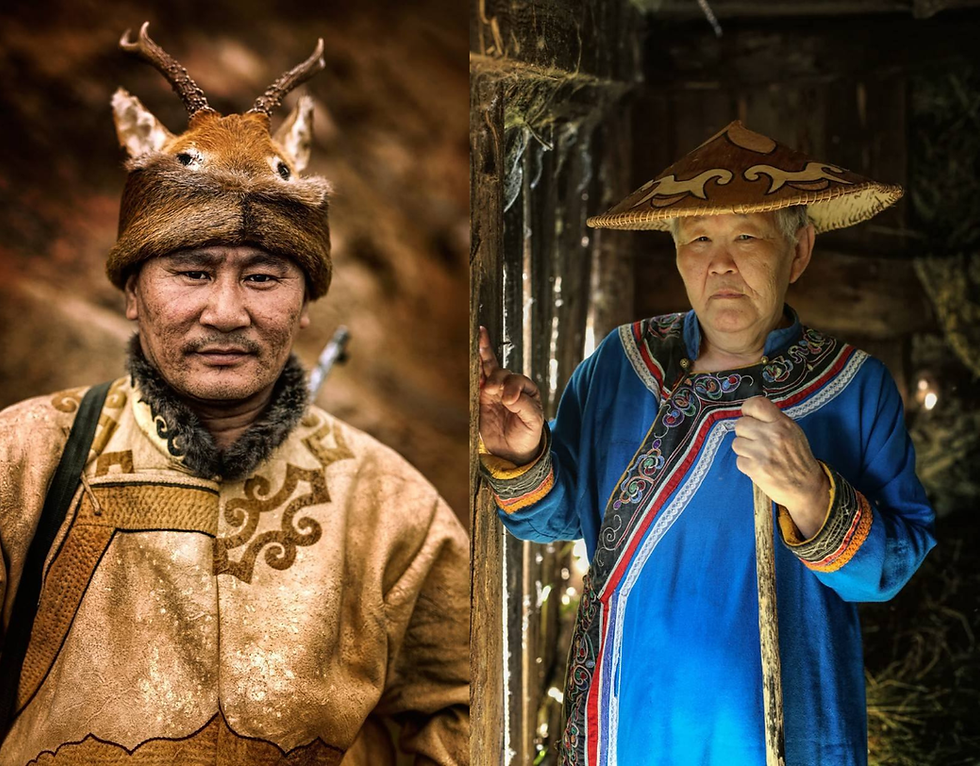
In the russian school curriculum, the history of the Far East and the period of its colonization are presented superficially and fragmentarily. From modern textbooks, children learn only about the “conquest of Siberia by Yermak,” which mainly concerns the Khanty and Mansi peoples living thousands of kilometers away from the territory of the russian Far Eastern Federal District. Meanwhile, before the arrival of tsarist russia, the lands of the Far East were inhabited by Indigenous peoples such as the Nanai, Koryaks, Nivkhs, Ulchi, Evens, Orochi, and others, each with their own languages, cultures, and traditions of hunting, fishing, and reindeer herding. Their way of life was built on a close relationship with nature and on distinct social institutions that ensured the resilience of their communities and the transmission of knowledge from generation to generation.
Colonialism was not a single event but a process that unfolded over centuries. The deliberate colonial policy of the Moscow occupiers aimed at erasing the history of Indigenous peoples has fostered widespread ignorance of their own past. Children of the Far Eastern peoples study the history of the Moscow principality in greater detail than the history of how their own ancestors lived, what lands they inhabited, and how they ultimately became part first of the Tsarist empire, then the Red empire, and finally the russian federation.

The Conquest of the Far East: The Beginning of Colonization
The Far East began turning into a colony long before imperial charters and official laws were introduced. As early as the 17th century, Cossack detachments, hunting expeditions, and other moscovites advanced along the Amur and Ussuri rivers and the coast of the Sea of Okhotsk.
They began constructing forts and outposts, took control of the fur trade, and established the dependence of local peoples on tsarist merchants. These expeditions were rarely peaceful: historical sources record instances of violence, forced tax collection, and the coercive incorporation of Indigenous communities into a new system.
The first settlements, such as the fort on the Ulya River built in 1639 by a Cossack detachment under the command of Ivan Moskvitin, and the Okhotsk fort founded by Semyon Shelkovnikov in 1647 as a major stronghold, served not as research bases but as important centers of colonial authority, strengthening the empire’s presence in territories where the Nanai, Nivkh, Evenki, Koryak, and other Indigenous peoples had lived for centuries. [1]
Local residents were subjected to economic pressure and sometimes physical violence, creating a precedent for structural control and restrictions on freedom. All of this became the foundation for subsequent colonization that continued for centuries. In official imperial documents, Indigenous peoples were referred to as “natives” or “aliens,” immediately defining their status as “others” and emphasizing their dependence on the center.
Tsarist administrations sought to control hunting, trade, and land, often imposing taxation systems, labor obligations, and regulations foreign to the traditional way of life. [2] Despite claims of a civilizing mission, in practice this meant the gradual restriction of community autonomy, the expansion of russian settlements, and active russification.
For most Indigenous inhabitants of the Far East, this marked the beginning of a process that eroded traditional institutions, undermined languages, and transformed their way of life, while their history, culture, and rights to the land remained almost invisible in official chronicles. The state administration actively controlled the resources it extracted from far eastern colonies: it regulated the hunting and collection of furs, fish, and other resources, since these industries constituted a major source of income for the empire (trade in hides, furs, and fish supplied both the domestic market and exports).

Yasak and the Charter of 1822: An Imperial System of Control
In the 17th–19th centuries, the yasak system was introduced, obliging the Indigenous peoples of the Far East—particularly in the regions of Kamchatka, the Okhotsk coast, and the northern territories—to pay yasak, a tax in furs. The collection of yasak was accompanied by the forced registration of the population. Abuses by tax collectors were common, and the tax itself drew communities into trade dependency on russian merchants. In addition, the state restricted and suppressed independent trade contacts between colonized peoples and other countries (for example, with China and Japan), which had existed for centuries prior. [3]
In tsarist russia, control over resources was a key element of the colonial economy. It included the leasing and granting of licensed rights to fishing and hunting grounds, as well as oversight of catches and harvesting that were important sources of state revenue. Naturally, the local inhabitants of the Far East received no share of the profits the empire derived from their resources.

In 1822, an attempt was made to systematize the administration of these peoples—the Statute on the Administration of Non-Russians officially defined the status of the inhabitants of Siberia and the Far East, but did so within the framework of an imperial system in which control and expansion remained the primary priorities. The law formally established a special status for Indigenous peoples, yet at the same time it merely consolidated control over them. [4]
For example, the Statute introduced for the first time a special term to designate the Indigenous peoples of Siberia and the Far East: from that point on, people who had lived on these lands for centuries were referred to as “inorodtsy” (“aliens”). This term remained in legislation until the beginning of the 20th century and signified more than a simple classification: in practice, Indigenous peoples were assigned a separate legal status, distinct from that of “russian subjects.”
The Statute divided Indigenous peoples into three categories:
settled — those living in villages and towns;
nomadic — those moving across territories according to the seasons;
wandering — hunting groups, often far from permanent settlements.
This division was закрепed at the legislative level and determined which rules and obligations applied to each people—from land rights to duties toward the state. However, peoples in all categories were still required to pay yasak or a monetary tribute to the empire. The tax burden and obligations were determined by the state rather than by the communities themselves. Land was assigned to communities for use, but it was not recognized as private or collective property.
The classification into categories was used primarily to politically manage people not as equals, but as different groups accountable to the empire. It is important to understand that the Indigenous peoples of the Far East were incorporated into the state system not as equal participants, but as supervised subjects. One of the main goals of this tiered system was to move wandering and nomadic inhabitants into the category of settled peoples. The reason lay in the financial interests of the empire—settled “inorodtsy” would be required to pay the higher tax rate imposed on state peasants.
All self-governing bodies were subordinated to district russian authorities, and their decisions were subject to oversight by state officials. Self-governance existed only within the framework of the imperial hierarchy. As a result, Indigenous communities received not so much freedom as a limited, controlled structure of authority designed to administer the peoples, while self-government remained largely nominal.
The document even contained a clause stating that the “rights and duties of the inorodtsy must be communicated to them ‘properly’” and translated into their languages where possible. In practice, however, such translations were extremely rare or were not carried out at all due to the lack of written languages, specialists, and official interest. As a result, Indigenous peoples in most cases were unable to fully exercise their legal rights.
Although the Statute of 1822 formally introduced a legal framework and even allowed elements of self-government, in reality it became an instrument for regulating and controlling Indigenous peoples by imperial authorities. It defined them as a distinct category of people, separate from the main population of russia, and subordinated their economic, legal, and social rights to the will of the imperial bureaucracy.
In the second half of the 19th century, and especially after the signing of the Treaties of Aigun (1858) and Beijing (1860), the active colonization of the Amur and Primorye regions began. The state was interested in settling these territories with migrants from the European part of the empire and actively granted them land allotments.
At the same time, the traditional territories of Indigenous peoples were not legally recognized as their property and continued to belong to the state. Their right to land was considered “use,” not ownership. This later became the foundation for future land conflicts. [5]
Throughout the entire history of the colonization of the peoples of the Far East, a number of measures were gradually introduced in various regions:
mandatory registration;
the assignment of people to specific clan administrations;
bans on moving independently to other districts without permission.
In this way, the state gradually brought nomadic and hunting societies into a system of administrative control.
Under the cover of missionary activity, tsarist russia exerted pressure on traditional institutions. The state religion displaced the traditional beliefs of the peoples, and in some places missionary work was accompanied by coercion.
By the late 19th and early 20th centuries, tsarist russia had intensified its course toward unification. For the Indigenous peoples of the Far East, the autonomy of their clan administrations was reduced, integration into the all-russian administrative system increased, and legal distinctions were gradually erased—yet without granting genuine equality.
Thus, the special status initially introduced for Indigenous peoples as a form of control was later rolled back toward full assimilation.
In tsarist russia there may not have been numerous separate “repressive manifestos,” but an official and consistent policy was carried out. Indigenous peoples found themselves in tax dependency, the lands of their ancestors no longer belonged to them, their centuries-old systems of self-governance were strictly regulated and controlled, the cultures of these peoples were pushed aside and gradually forgotten, and the people themselves were forced to assimilate.
Unfulfilled Promises of Soviet Power
The new soviet government proclaimed the principles of friendship among peoples and equality, promising support for Indigenous communities and recognition of their cultural rights. However, these promises were ultimately not fulfilled.
After the revolution of 1917, the authorities of red russia declared a complete break with the “colonial policy of tsarism.” Official rhetoric proclaimed the right of peoples to self-determination, equality, and the development of national cultures. For the Indigenous peoples of the Far East, this sounded like a historic opportunity. [6]
The 1920s: Korenizatsiya and National Districts
In the 1920s, the new state did indeed take steps that appeared to support Indigenous peoples and signal a change in policy toward them. In the regions of the Far East, national districts and village councils were created (for example, for the Nanai, Udege, Nivkh, Evenki, and others). Writing systems were developed for languages that had previously lacked alphabets, and schools were opened where instruction was conducted in native languages. The state promoted the policy of korenizatsiya—the advancement of representatives of local peoples into positions of authority.
Formally, this meant recognition of cultural distinctiveness. The state demonstrated that it was building a “union of equal peoples.” However, even during this period all autonomy remained strictly embedded within the party hierarchy. National governing bodies did not possess real independence.
The 1930s: Collectivization and the Destruction of the Traditional Way of Life
The turning point came in the late 1920s and early 1930s. Collectivization struck at the very foundation of the traditional economy of the Indigenous peoples of the Far East.
All hunting and reindeer-herding households were consolidated into collective farms, private reindeer herds were confiscated from families in favor of the state, and procurement quotas were introduced that ignored ecological cycles. For peoples whose livelihoods depended on hunting and traditional harvesting, this meant the destruction of a survival system that had been formed over centuries—one that could not function according to a “plan” written in offices in moscow.
Many clan leaders were repressed as “kulaks” or “enemies of the people,” and governance passed into the hands of appointed party cadres. [7]
One of the most painful instruments of discrimination and colonization was the system of boarding schools. Children from Indigenous families were taken en masse from their homes and sent to study in settlement and district centers, where education was conducted primarily in russian. Traditional knowledge and native languages were forcibly displaced, and contact with families was restricted. Children could go years without seeing their relatives. This created a generational rupture: children returned to their communities with poor command of their native language and little knowledge of their traditional way of life. Formally, this was called the “elimination of illiteracy.” In reality, it was a continuation of colonial policy and a form of forced assimilation.

Industrialization and Resource Exploitation
From the 1930s onward, the Far East became an important raw-material base. Many resources had historically been extracted in the region, but red russia was able to begin squeezing them out in enormous quantities thanks to the system of forced labor created by the authorities. The extraction of gold, tin, uranium, coal, and gas, as well as logging, all expanded through the use of the gulag camp system. Resources taken from far eastern land were sent both for export and to serve the needs of the “freest country in the world.” Decisions about the development of these territories were made in moscow, where the opinions not only of Indigenous peoples but of other residents of the Far East were not taken into account at all. [8]
The industrial exploitation of far eastern territories led to the pollution of rivers, the decline of fish populations, the destruction of hunting grounds, and, overall, the degradation of the region’s ecosystem. As in tsarist russia, Indigenous peoples received virtually no share of the profits extracted from their lands.
The 1950s–1980s: “Friendship of Peoples” and Hidden Unification
After the Second World War, the rhetoric of the moscow authorities softened somewhat. Once again there was talk of equality, brotherhood, and cultural diversity, but in practice this remained largely rhetorical. The russification of education continued, many minority languages approached the brink of extinction, local youth were encouraged to move to cities, and traditional forms of livelihood were publicly labeled as “backward.” Having no role in industrialization either as a source of labor or as suppliers of food, the settlements and camps of Indigenous peoples became economically useless for the soviet authorities. Ministries responsible for economic development were not accountable to local administrations, while local administrations—entirely dependent on fulfilling production plans—did not respond to the demands of the Indigenous population. As a result, in 1957 the Party’s Central Committee and the Council of Ministers issued a joint decree requiring all enterprises to involve Indigenous peoples in the implementation of major industrial and agricultural projects—largely through a system of hiring and promotion privileges, but also through the intensification of traditional reindeer herding, hunting, and fishing.
On paper, autonomous districts and national regions remained in place. In reality, however, economic and political power belonged entirely to the union center. [9]
The Outcome of the Soviet Period
At the beginning of its formation, the soviet system recognized the existence of Indigenous peoples, partially supported their cultures, and provided institutional forms for their development. But it later revealed itself as yet another empire: it eliminated the economic independence of these peoples, destroyed their traditional social structures, created dependence on state subsidies, accelerated the linguistic and cultural assimilation of the local population, and ultimately entrenched a resource-extraction model for the region’s development.
If in the russian empire control had been exercised through yasak and administrative regulation, then in the ussr it was carried out through the planned economy, collectivization, and ideology. By the end of the soviet period, many communities had become demographically weakened, economically dependent, and culturally vulnerable.

From the Federalism of the 1990s to Mobilization
With the collapse of red russia and the formation of the russian federation, Indigenous peoples of the Far East briefly encountered new opportunities. In the 1990s, the rights of Indigenous peoples to land and traditional livelihoods were formally recognized in the constitution of the russia and in various regional laws. National districts, community councils, and cultural centers were established. Some languages gained the opportunity to be taught in schools, and small media outlets in native languages were opened. Indigenous peoples also gained the possibility to advocate for their rights, with organizations emerging to protect their interests—including the right to traditional hunting and fishing and the environmental protection of their territories. Between 1990 and 1991, several public associations representing the interests of Indigenous small-numbered peoples of the North were founded. Among them were the Association of Small-Numbered Peoples of the North (1990), the Parliamentary Assembly of Small-Numbered Peoples of the North, Siberia, and the Far East (1991), and the International League of Small-Numbered Peoples and Ethnic Groups (1991).
However, by the 2000s, there was a rollback toward centralized policy. Laws on traditional livelihoods remained largely declarative, while real rights became heavily restricted by licensing, tenders, and administrative barriers. Autonomous districts were merged with krais, reflecting a general trend toward centralization. The federal law adopted by the State Duma in 2000, On the General Principles for the Organization of Communities of Small-Numbered Indigenous Peoples of the North, Siberia, and the Far East of the Russian Federation, marked an important stage in the institutionalization of Indigenous life. At the same time, it strengthened state regulation of their traditional forms of self-organization. Whereas in the 1990s many clan and territorial associations had existed as flexible forms of community self-organization based on customary law and traditional practices, the new law effectively transformed them into legally registered non-profit organizations. Communities were required to undergo state registration, adopt a charter, and operate within strictly defined legal purposes.
As a result, traditional communities were integrated into the bureaucratic system of state governance, limiting their autonomy and sharply narrowing the space for independently managing traditional livelihoods, using natural resources, and exercising internal self-government. Many researchers note that this legal model represented a shift from the relatively free self-organization of Indigenous peoples in the 1990s to a more tightly regulated system in the early 2000s, in which the state acquired additional instruments of control over social and economic processes in their environment. [10]
Large industrial companies owned by moscow authorities received priority in resource development, depriving Indigenous communities of access to hunting and fishing grounds. All power and financial flows were concentrated in moscow, leaving the Far East dependent and economically subsidized. At the same time, russification and control over education intensified—schools and clubs in native languages were gradually closed.
Recent Years: Mobilization and Pressure on Activists
Since the start of russia’s full-scale invasion of Ukraine in 2022, the situation of Indigenous peoples has deteriorated particularly sharply. Mobilization has played a major role in this. According to data from the Ukrainian Foreign Intelligence Service, as well as independent analysts and human rights observers, Indigenous men are drafted into the army nearly three times more often than ethnic russians—95 mobilized per 10,000 non-russian population compared to 34 per 10,000 russians. Activists report that members of these peoples have been disproportionately involved in combat operations—although laws theoretically provide for alternative service, in practice such guarantees are not upheld under conditions of mobilization. Moreover, our movement has documented cases in which the russian army command forged signatures for conscripts from Indigenous communities and sent them to the front, where many subsequently died. [12]
Unfortunately, Indigenous individuals often go to enlistment offices themselves. The lack of stable employment in national settlements, low income levels, and limited awareness of their own rights, combined with decades of ideological integration into the russian state narrative, create conditions in which military service is perceived by some residents as the only available social opportunity—a way to earn a living, gain status, or demonstrate loyalty to the state to which their identity was artificially tied through long-term assimilation policies. In this sense, the war becomes less a conscious political choice than a consequence of structural processes of russification and socio-economic vulnerability shaped by the state over decades. [13]
In the Republic of Sakha (Yakutia), the largest region of Siberia and the Far East with a high percentage of Indigenous population, mobilization is carried out without regard for Indigenous rights and without observing legal exemptions, even though russian legislation provides protections for traditional economic roles (for example, reindeer herding). In practice, mobilization has taken place in remote rural settlements without consideration for the small size of local communities and without respect for their rights. [14]

Under the rule of the occupiers in the russia, restrictions on economic and cultural activities have been strengthened and additional limitations introduced. Traditional livelihoods, crafts, and educational initiatives increasingly face bureaucratic obstacles.
Currently, according to expert assessments, russian legislation provides no real mechanism for obtaining genuine consent from Indigenous communities for any projects or decisions affecting their lands and resources. [15]
For example, in recent years in Khabarovsk Krai, gold production has been growing at record rates, with new mines and processing facilities being launched, and the region increasingly turned into a federal-level resource base. Gold is extracted using industrial open-pit methods, which inevitably leads to deforestation, changes in river courses, and water pollution. Decisions regarding licenses and the development of deposits are made at the federal level, while mechanisms for genuine consent from local communities are purely formal. As a result, the natural territories on which hunting, fishing, and the traditional way of life of Indigenous peoples depend are absorbed into large-scale resource projects that primarily benefit the center, while the environmental consequences remain in the region. [16]
Over the past decades, the legal space for Indigenous peoples has eroded: some autonomous territories have been abolished, and key institutions no longer effectively protect their interests. In practice, Indigenous communities continuously lose access to traditional resources and lands under pressure from large industrial projects, infrastructure development, and the centralization of authority in moscow.
International mechanisms, such as the principle of Free, Prior and Informed Consent (FPIC), recognized by the international community, have not been implemented into the russian legal system. Furthermore, the russia has not even ratified ILO Convention No. 169 on the rights of Indigenous peoples.
Cultural Assimilation and Russification
Official census data in contemporary russia show that the populations of most Indigenous peoples continue to decline. According to activists’ estimates, as well as the 2021 census, the populations of many small Indigenous groups have decreased, with around two-thirds of such peoples losing population since the 2010 census. Processes of depopulation, assimilation, and cultural loss are intensifying. [17]
This trend is reflected not only in demographics but also in language: many native languages are on the verge of extinction, and the number of speakers sharply decreases with each generation.
Repression of Activists
Human rights organizations and international observers report increasing repression against activists from Indigenous communities who oppose violations of their rights. These actions include arrests and pressure from law enforcement agencies, turning attempts to defend community interests into a risky endeavor.
Persecution affects activists across the country. The most well-known and documented case is the arrest of Darya Egereva, a member of the Selkup people and an Indigenous rights activist, who for several years engaged in international work, including participating in UN forums. She was detained on December 17, 2025, and charged with participation in a “terrorist organization.” She faces up to 20 years in prison and remains in custody despite international calls for her release. [18]
On the same day—December 17, 2025— russian federation law enforcement carried out a coordinated operation targeting Indigenous activists, including searches and arrests. For example, Valentina Sovkina, an activist from the Saami community listed as an Indigenous representative and participant in international forums and events, was subjected to a search.
According to international organizations, at least 17 activists were detained across various regions that day, including areas bordering the Far East and Siberia, all connected to Indigenous rights issues.
Among them were representatives from the Republic of Sakha (Yakutia), Tyumen, Komi, and other regions. While not all remained in custody, many faced criminal charges and pressure from security forces.
Beyond direct arrests, the state has declared a number of organizations associated with Indigenous peoples or defending their rights as extremist or terrorist, including the Aborigen Forum—the organization in which Egereva participated—which was officially closed under the pretext of “extremism.” [19]
Repression has also affected our organization. The russian authorities recognized the movement Zelenyi Klyn — Moya Batkivshchyna (“Green Wedge — My Homeland”) as a “terrorist” organization. The head of the movement, Vladimir Dubovsky, was declared a “terrorist” and placed on the federal wanted list. The author of this article and head of the movement’s press service, Alina Savelyeva, is also wanted. One of the active members of the movement, Natalia Romanenko, is currently in pre-trial detention with her husband.
Thus, by the 2020s, the historical trajectory of “control and assimilation” continues: whereas the tsarist and soviet empires once undermined traditional institutions through taxes, collective farms, and industrialization, today the state uses legislation, licenses, economic dependence, and military mobilization to consolidate centralized control over the Far East.
The Future of Indigenous Peoples of the Far East
In an independent Far East, founded on principles of justice and respect for Indigenous peoples, the following measures could be implemented:
Genuine self-governance for Indigenous communities, including the right to free and informed consent for any projects on their lands;
Guarantees for the preservation of traditional languages and educational programs rooted in native cultures;
Legal protection of lands and resources essential for traditional economies;
Social programs aimed at restoring and supporting Indigenous societies, rather than assimilating or exploiting them.
Such a policy would not only preserve the unique cultures and identities of the Indigenous peoples of the Far East, but also ensure sustainable regional development based on equality and respect.
The history of Indigenous peoples in the Far East is not a story of “integration into civilization,” as official rhetoric presented it for decades. It is a history of the gradual restriction of autonomy, resource expropriation, the destruction of traditional ways of life, and the displacement of languages.
For centuries, the fate of the Indigenous peoples of the Far East was determined by decisions made far from their lands—first in st. petersburg, then in moscow. The empire imposed yasak and administrative control; the soviet state carried out collectivization, boarding schools, and industrial projects; and the russian federation continues to extract resources from Far Eastern lands and waters while sending local residents to war. Political slogans and state names changed, but the underlying model remained the same: the center makes decisions, and the Far Eastern territories and their peoples are expected only to obey.
Today, with thousands of Far Eastern residents sent to the frontlines in the war in Ukraine, this historical pattern has become especially evident. People whose ancestors lived for centuries along the Amur, the Sea of Okhotsk, and the Pacific Ocean are once again instruments of foreign politics and geopolitical ambitions.
Yet history is not destiny. The question of the Far East’s future is whether the region can finally break free from the colonial logic of its relationship with the center.
In an independent and free Far East, Indigenous peoples could gain real mechanisms of self-governance, protection of traditional territories, and the right to determine the future of their lands, cultures, and natural resources independently.
Only then would the history of the region cease to be a story of exploitation and become a story of development, cooperation, and respect for the peoples who have lived here long before imperial borders were drawn.
Author: Alina Savelyeva
References:
Moskvitin, Ivan Yuryevich (c. 1600–after 1647) – Russian explorer, ataman of foot Cossacks;
Stalin’s Collectivization: Far Eastern Peasantry in the First Half of the 1930s;
Arctic Mirrors of Russia and the Small Peoples of the North, Yury Slezkin, 1994;
In Ukraine, a Conscription Nivkh Man Died, a Contract Signed by His Commander;
How Russia’s Diamond Republic Finds Manpower for Putin’s Army
Khabarovsk Krai Expects a 15.3% Increase in Gold Production;
In Moscow, Indigenous Rights Defender Darya Egereva Was Arrested;


Comments